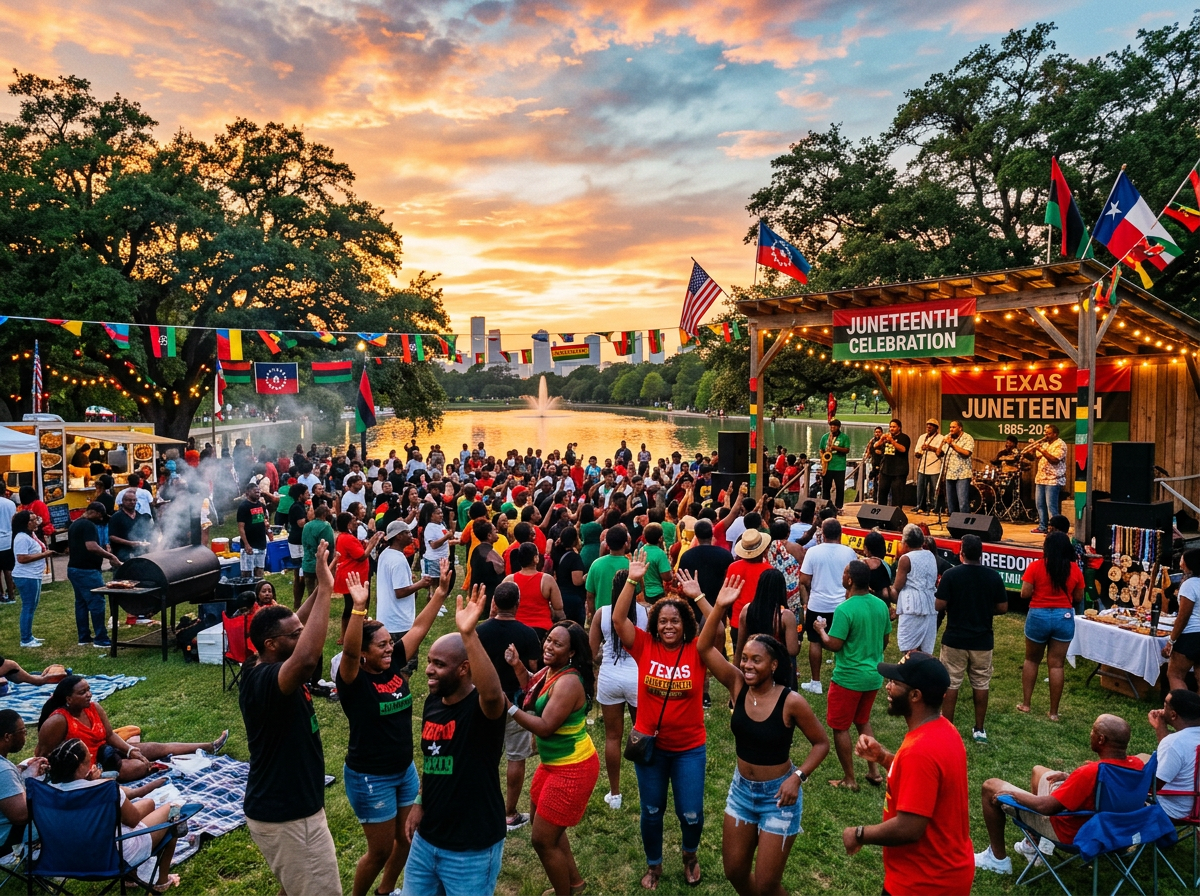
Juneteenth (short for “June Nineteenth”) commemorates June 19, 1865, the day enslaved African Americans in Galveston, Texas, finally received word that the Civil War had ended and they were free. This occurred two and a half years after the Emancipation Proclamation was officially issued, which had declared the freedom of enslaved individuals in Confederate states but had not yet reached those in Texas.
Essential facts about the history and evolution of Juneteenth include: The Path to Freedom Delayed Emancipation: Although President Lincoln’s Emancipation Proclamation took effect on January 1, 1863, the news did not immediately reach remote enslaved populations.
Texas, isolated and largely untouched by fighting, had become a haven for enslavers fleeing Union forces, keeping over 250,000 enslaved people in bondage—many of whom were unaware of their legal emancipation. General Order No. 3: On June 19, 1865, Union Major General Gordon Granger arrived in Galveston, Texas, and read General Order No. 3, finally enforcing the legal freedom of all enslaved people in the state; this moment marked a pivotal shift in American history, symbolizing hope and dignity for countless African Americans.
The “Scatter”: Following the announcement, many newly freed people immediately left Texas to search for separated family members, a period that became known as the “Scatter”, as families sought to reunite after years of enforced separation due to slavery.
Early Traditions and Decline Early Celebrations: The first organized celebrations date back to June 19, 1866, in Texas. Early gatherings—often called Jubilee Day, Freedom Day, or Emancipation Day—featured prayer services, traditional songs, and the reading of the Emancipation Proclamation as people gathered to honor their newfound freedom and connect with their heritage.
Community Investment: In 1872, formerly enslaved men in Houston, Texas, pooled $800 to purchase 10 acres of land specifically to host Juneteenth celebrations, which became known as Emancipation Park; this effort reflected a strong commitment to preserving the memory of emancipation while also fostering community cohesion and cultural identity.
Jim Crow Suppression: In the early 20th century, strict segregation laws and the economic hardships of the Great Depression forced many Black farming families into cities, which severely dampened public celebrations, causing Juneteenth to fade into relative obscurity for several decades.
Resurgence and Federal Recognition Civil Rights Revival: The holiday saw a massive resurgence during the Civil Rights Movement of the 1960s, notably tied to Martin Luther King Jr.’s 1968 Poor People’s Campaign, as activists used the occasion to honor the struggle for civil rights and remind America of its ongoing commitment to racial equality.
State Recognition: In 1980, Texas became the first U.S. state to make Juneteenth an official state holiday, a significant acknowledgment of its importance in American history and a step towards national recognition of African American heritage.
Federal Holiday: On June 17, 2021, following decades of advocacy, President Joe Biden signed the Juneteenth National Independence Day Act, officially making June 19 a U.S. federal holiday, thus formalizing the commemoration of this vital chapter in American history and ensuring that future generations remember the struggles and triumphs of those who fought for freedom.
Just a little information about Juneteenth is important to know your history, as it marks the day in 1865 when enslaved African Americans in Texas finally received the news of their liberation, two and a half years after the Emancipation Proclamation was issued. This day, celebrated on June 19th, serves as a powerful reminder of the struggles for freedom and the ongoing fight for equality. Understanding Juneteenth helps to acknowledge the resilience of those who endured oppression and to celebrate the rich cultural traditions that have emerged from this pivotal moment in American history.
By learning about Juneteenth, we gain a deeper appreciation for the contributions of African Americans and the significance of their fight for justice and civil rights. This understanding encourages us to reflect on the past while actively engaging with the ongoing efforts to achieve equality for all. It emphasizes the importance of collective memory in shaping our identities and informs our actions in the present.
I’ve always wondered why it’s called Juneteenth, a name that beautifully intertwines the month of June with the powerful word “nineteenth.” The combination serves as a tangible reminder of a historic day that symbolizes the emergence of hope and the beginning of a new chapter for countless individuals and families. It is a day to reflect not only on the hardships endured but also on the celebrations of cultural heritage that arose from this struggle.
Booker T. Washington remembered his mother “was standing by my side, leaned over and kissed her children, while tears of joy ran down her cheeks. She explained to us what it all meant, that this was the day for which she had been so long praying but fearing that she would never live to see.” This profound moment encapsulated the essence of resilience and hope that defined the struggle for freedom. The bittersweet emotions captured in his recollection echo the mixed feelings surrounding liberation—joy for the newfound freedom and sorrow for the lives lost during the fight.
I celebrate freedom every day as a black woman, recognizing that it is not merely a personal victory but a testament to the sacrifices of countless individuals who fought for equality and justice. Each day serves as a reminder of the enduring legacy of those who have come before me and their unyielding spirit in the face of adversity. I never take it for granted, understanding that each day I live in liberty is a continuation of their legacy, a reminder of the strength ingrained in my identity and the responsibility I carry to honor their dreams and aspirations.
This journey of understanding Juneteenth not only enriches my personal narrative but also connects me to a larger tapestry of history, culture, and community. It ignites a passion to advocate for social justice and engages me in meaningful conversations that promote awareness and change. As we gather with loved ones on Juneteenth, sharing stories, food, and traditions, we reaffirm our commitment to the ongoing work of fighting against systemic inequalities and ensuring that the hard-won freedoms are preserved and expanded for future generations. This day is a powerful invocation of unity, community, and continued resilience in the pursuit of justice.
Subscribe and stay updated to receive the latest news, exclusive offers, and insightful articles delivered straight to your inbox, ensuring you never miss a beat in our ever-evolving community.
Leave a Reply